
Pressure-Balanced Wet-Mate Electro-Optic Hybrid Connector Earns DNV Certification
Categories: Author: MarineConn Views: 54
Industry News — October 2026
A major milestone in subsea interconnect technology has been reached: a pressure-balanced wet-mate electro-optic hybrid connector has passed full type certification by DNV (Det Norske Veritas), one of the most demanding qualification bodies in the offshore and marine engineering world. The certified product is reported to be the first of its kind developed in China, and it signals how quickly wet-mate connector technology is advancing across the global subsea supply chain.
Why Wet-Mate Connectors Are the Hardest Problem in Underwater Interconnect
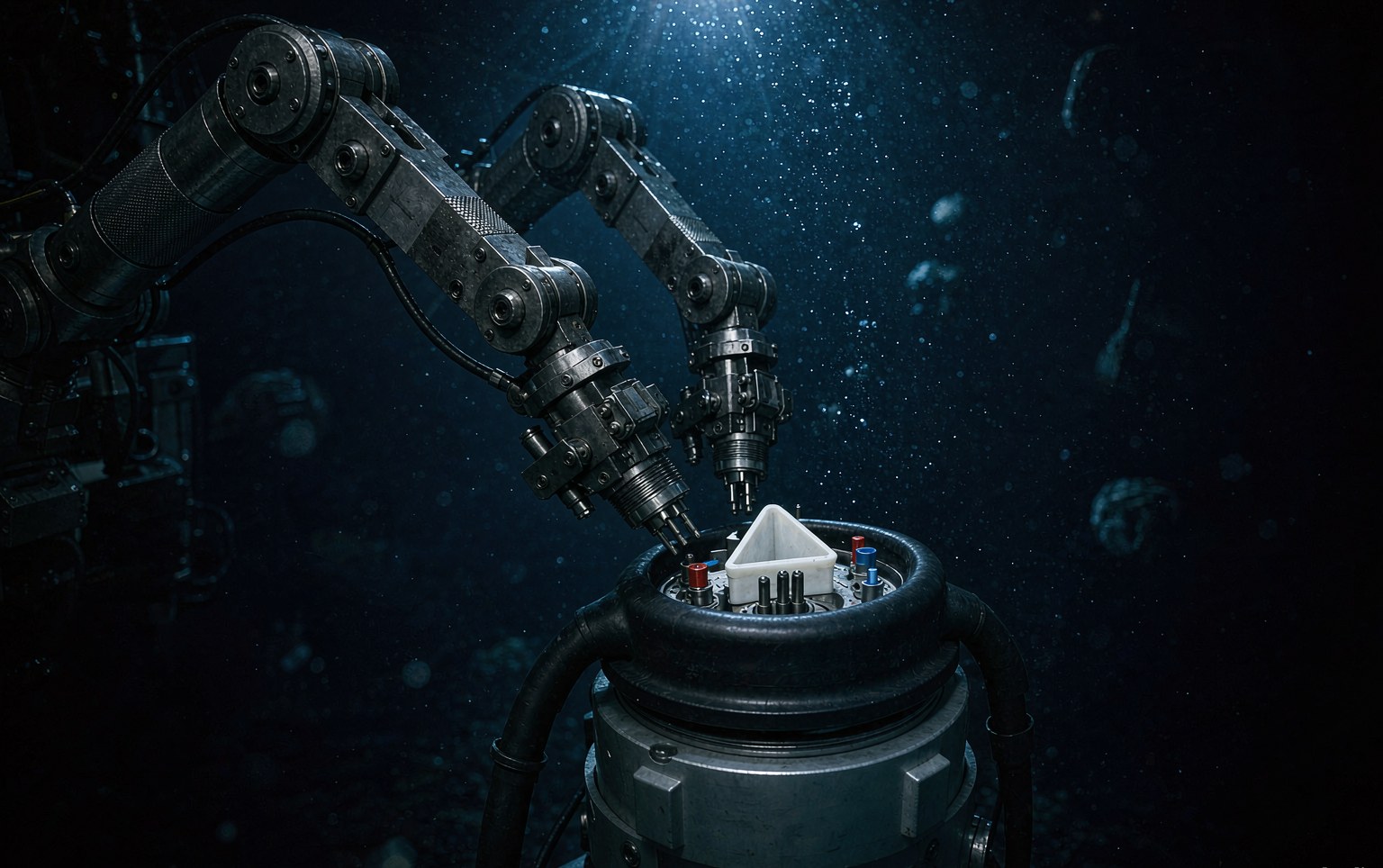
Underwater connectors fall into two broad families. Dry-mate connectors use static sealing and can only be mated or unmated in a dry environment — on deck or inside a pressure housing. Wet-mate connectors, by contrast, are designed to be plugged and unplugged while fully submerged, often by an ROV manipulator, with seawater, silt and hundreds of bars of hydrostatic pressure acting on every sealing interface.
The engineering challenge is severe: particles trapped between mating faces can scratch seals, hydrostatic pressure forces water into every gap, and deeper operation means greater insertion forces. A pressure-balanced architecture solves part of this by keeping the internal compensating medium at the same pressure as the surrounding seawater, so the differential pressure — and therefore the mating force — stays near zero even at full ocean depth ratings.
Four Key Technical Breakthroughs Behind the Certification
- Deepwater wet-mate dynamic sealing — redundant anti-silt dynamic seals that maintain contact integrity through repeated underwater mate/demate cycles.
- Pressure-balanced structure — internal pressure compensation keeps insertion forces close to those in air, even at 4,500-meter-equivalent depths.
- Electro-optic hybrid integration — fiber-optic end faces (sub-micron alignment tolerance) and electrical contacts follow separate guided paths inside one housing, so power and high-bandwidth data transmit simultaneously without interference.
- ROV-friendly mechanical interface — flexible grip handles, a large-tolerance guide funnel, automatic locking, and visual status indicators that let an ROV operator confirm mating state on camera.
Inside the DNV Qualification Process
DNV certification for subsea connectors is structured in four stages: risk assessment, design review, manufacturing audit, and performance testing. The most punishing test simulates repeated mating and demating in turbid seawater at a pressure equivalent to 4,500 meters water depth — any measurable degradation in sealing or optical/electrical contact performance means failure. Many tests run around the clock over days.
Passing at this level matters commercially as well as technically. DNV type approval is widely recognized by offshore wind farms, subsea oil & gas operators and ocean-observation programs, reducing the need for project-by-project requalification and opening the door to high-end international markets.
What This Means for the Subsea Connector Market
Global demand for wet-mate connectors is rising fast, driven by floating offshore wind (where 66 kV-class wet-mate systems have just appeared), deep-sea observatories, AUV/ROV resident systems, and deepwater resource development. Established suppliers such as TE Connectivity (SEACON), Glenair SeaKing, MacArtney SubConn and Teledyne Impulse have long dominated the field; high-performance entrants with full third-party qualification are now adding real sourcing alternatives — a trend worth watching for every procurement team building subsea vehicles, sensors and infrastructure.
At MarineConn, we keep close track of wet-mate and pressure-balanced interconnect technology. Our own underwater connector portfolio covers micro and standard wet-mate series, bulkhead receptacles, penetrators and electro-optic configurations for ROV/AUV, oceanographic and offshore applications. Contact us to discuss your project or request a quote.
Source reference: The Paper /澎湃新闻 — “A universal socket that opens the deep sea”