

European Underwater Cable Technology Advances: 525 kV HVDC Production and Deep-Water Interconnectors
Categories: Author: MarineConn Views: 77
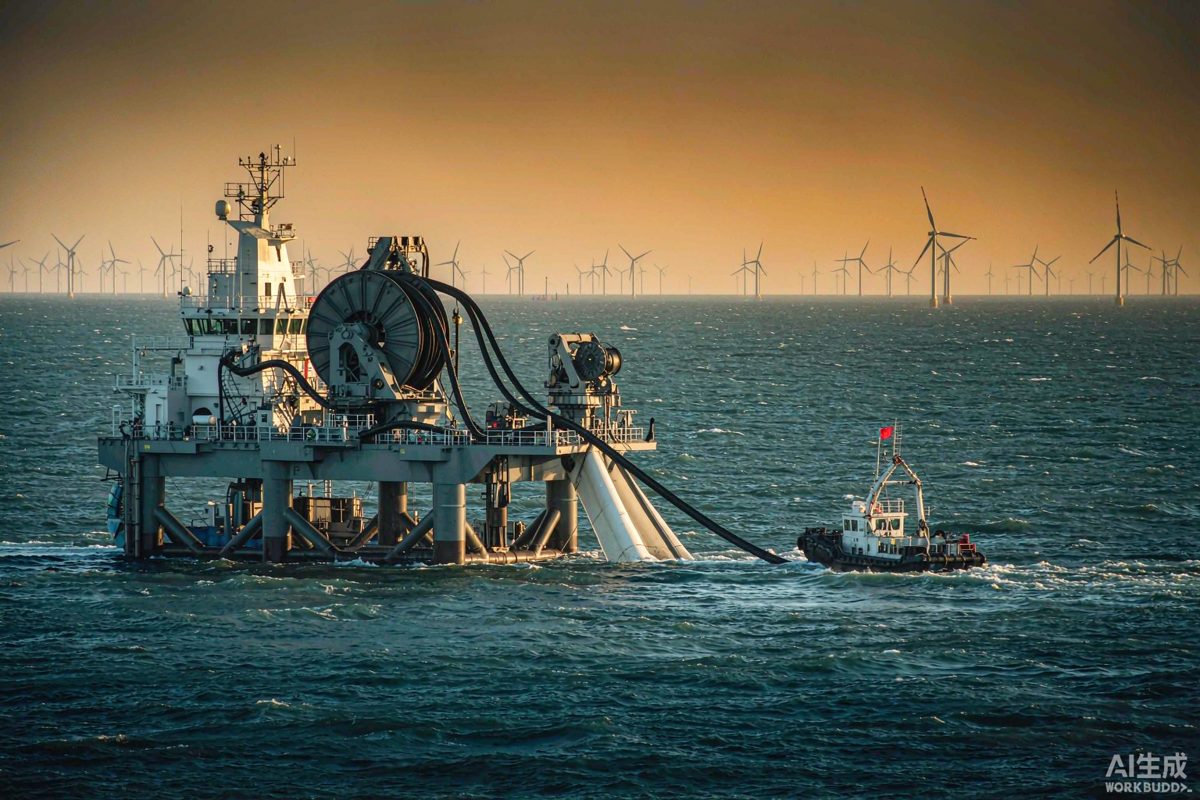
Europe is setting the global pace in underwater cable technology. In October 2026, Nexans began the first industrial-scale production of its 525 kV HVDC XLPE submarine cable at the Halden plant in Norway for the LanWin2 project — a milestone that signals the shift from laboratory qualification to large-scale delivery of next-generation subsea power transmission across the continent.
LanWin2: 2 GW of North Sea Wind to the German Grid
Under a long-term frame agreement with Dutch-German grid operator TenneT, Nexans will deliver approximately 250 km of 525 kV HVDC onshore and submarine cable systems for LanWin2 — a contract valued at around €1 billion, signed in January 2025. The connection will transport up to 2 GW of renewable electricity from offshore wind farms in the German North Sea to the Heide region in Schleswig-Holstein, with commissioning expected in 2031. An associated offshore converter platform, built by a Siemens Energy and Dragados Offshore consortium, began steel cutting in September 2025.
The same 525 kV HVDC XLPE technology will also serve the BalWin3 project, where cable installation in the Wadden Sea and nearshore areas is planned for 2027.
Europe’s Record-Breaking Interconnector Fleet
| Project | Route | Length / Capacity | Highlight |
| North Sea Link | UK – Norway | 720 km / 1.4 GW | Hydropower-wind energy exchange with updated 2026 trading arrangements |
| Viking Link | UK – Denmark | 765 km / 1.4 GW | World’s longest land and subsea HVDC interconnector; first full-capacity year in 2026 |
| LanWin2 | German North Sea – Schleswig-Holstein | ~250 km / 2 GW | First industrial-scale 525 kV HVDC XLPE submarine cable production |
| Great Sea Interconnector | Greece – Cyprus – Israel | Up to 3,000 m depth | Ending Cyprus’s energy isolation; extreme-depth engineering |
| Tyrrhenian Link | Italy (Tyrrhenian Sea) | Installed at 2,150 m | Proof that water depth is no longer a barrier |
Three Technology Trends Behind the Progress
1. Higher Voltage, Lower Losses
The move to 525 kV HVDC with cross-linked polyethylene (XLPE) insulation allows up to 2 GW per circuit over long distances with minimal transmission losses — the backbone of Europe’s offshore wind grid build-out.
2. Deeper Water, Longer Distances
With installations now proven at depths beyond 2,000 m and interconnectors stretching over 700 km, subsea cables have become the “invisible highways” connecting national grids and enabling real-time renewable energy trading.
3. Dynamic Cables for Floating Wind
As floating offshore wind scales up, dynamic submarine cables and their connector interfaces must withstand continuous flexing, corrosion and high pressure — driving innovation in materials, overmolding and sealing technology.
What It Means for Equipment Suppliers
Every kilometer of new subsea cable relies on reliable terminations, joints and sensor packages. MarineConn supports this ecosystem with underwater cable assemblies, subsea connectors and marine cable winches engineered for harsh offshore environments — from cable-laying support equipment to sensors and monitoring systems.
Source: Nexans press release, 16 October 2026; industry interconnector case studies (Leadvent Group).