

Background of the Collaboration
The 760th Research Institute of CSSC focuses on research and equipment development in areas such as ship and marine rescue, and underwater engineering, with particularly stringent quality and performance standards for military‑related equipment. In one of its underwater protection‑equipment R&D projects, there was an urgent need for electronic components that offer high sealing performance and can withstand harsh environments, to ensure stable operation in scenarios like deep‑sea rescue and national defense protection. Leveraging its qualifications as a military‑related supplier and its core technological advantages in underwater electronic devices, MarineConn Technology successfully became the institute’s partner for military‑related component supply after undergoing multiple rounds of rigorous product testing and qualification reviews.
Scope of Cooperation
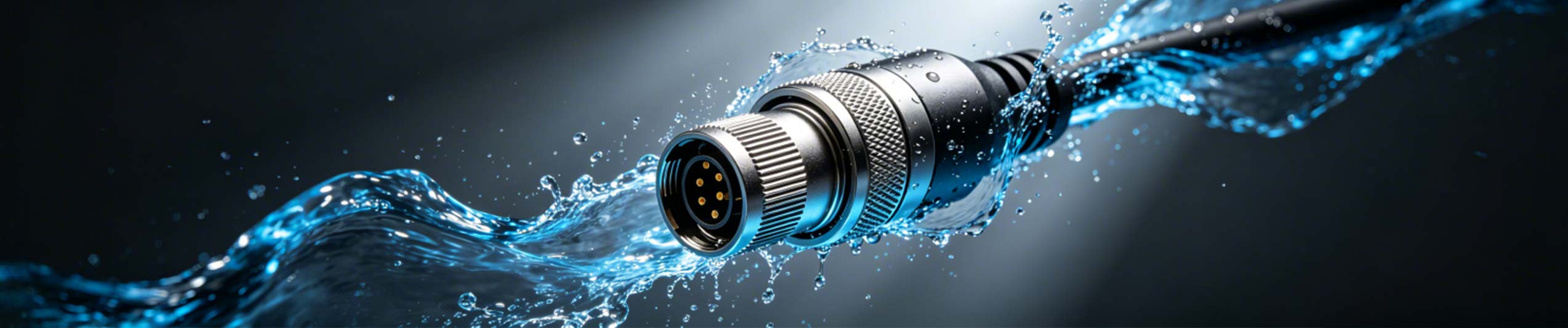
In response to the project requirements, MarineConn Technology has provided a customized portfolio of watertight connectors, electronic sealing enclosures, and deep-sea antennas. The watertight connectors employ sealing technologies that meet relevant military standards, capable of withstanding underwater pressures up to 6,000 meters, ensuring zero leakage in both signal and power transmission. The electronic sealing enclosures are crafted from corrosion-resistant, impact‑proof alloy materials, creating multi‑layered protective barriers for the internal precision electronic components. Meanwhile, the deep-sea antennas have been optimized for superior anti‑interference performance, guaranteeing stable long‑range communication even in complex marine electromagnetic environments. The company has established a dedicated service team that participates throughout the entire process—installation, commissioning, and performance verification—and promptly addresses the institute’s technical iteration and optimization needs.
Collaborative Outcomes
All supporting products have passed rigorous military‑grade acceptance tests and are well matched to the underwater protective equipment of CSSC Institute 760. They have demonstrated stable and reliable performance in numerous demanding environmental tests and sea trials, providing solid support for the successful finalization and deployment of the equipment. This collaboration has not only strengthened MarineConn Technology’s strategic footprint in the military‑related sector but has also earned the institute’s high confidence. The two parties have signed a long‑term strategic cooperation agreement and will continue to engage in in-depth collaboration on the upgrade and iteration of multiple types of military‑related equipment.